← All Work02 — Design Systems
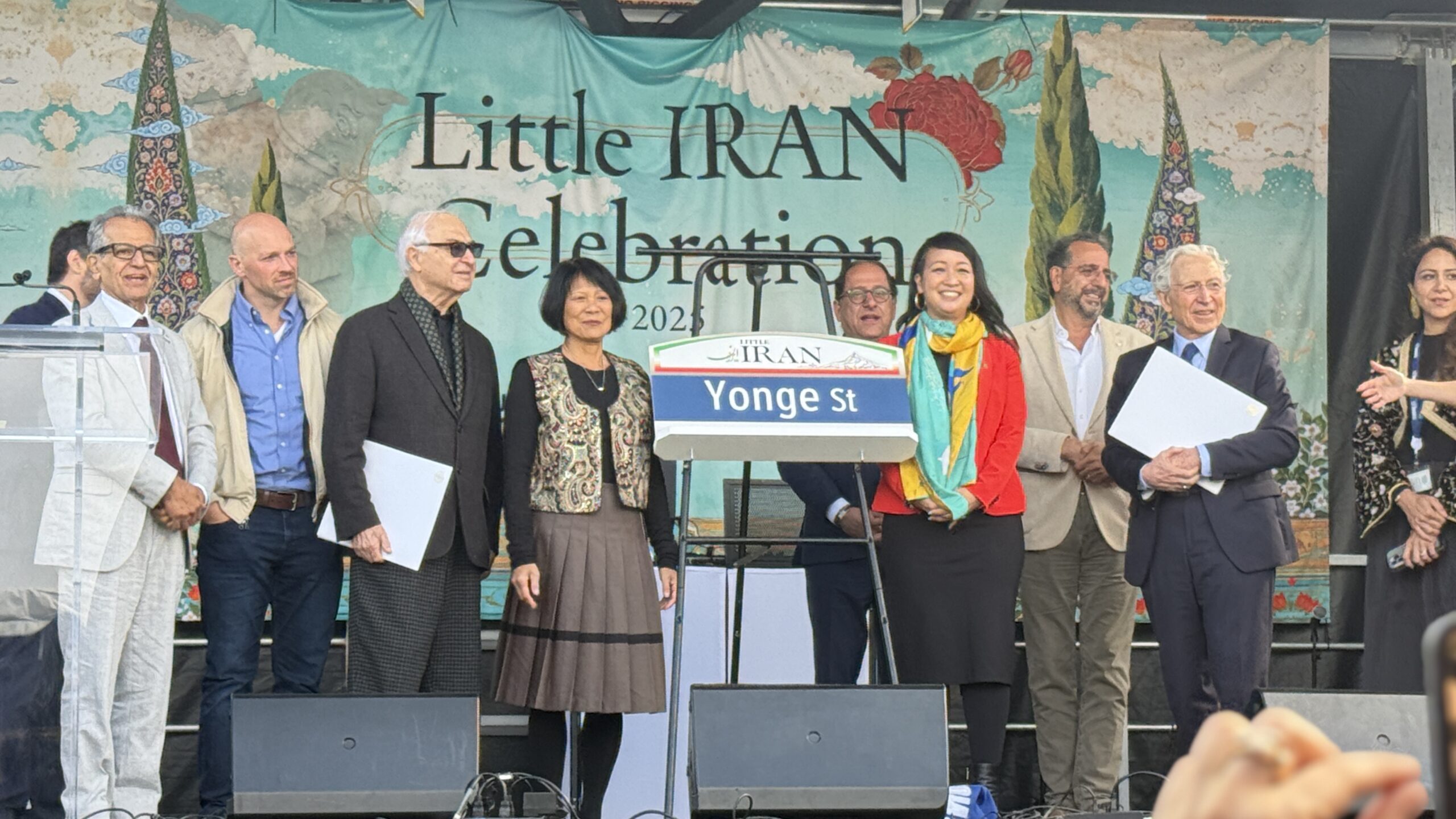
Little Iran Cultural District
Public Space Identity System for the City of Toronto
Permanent
Public Space Presence
Foundation
For Future Expansion
Project Details
Role
Design Lead, Visual Identity and Public Space
Tools
Figma · Adobe Illustrator · Adobe InDesign
City-recognized · Permanent civic infrastructure
Overview
Cultural identity systems for public space fail in one of two directions: they stereotype the culture they represent, or they sanitize it into irrelevance. Neither was acceptable for a community that had fought for this recognition.
Designing a cultural district identity for the City of Toronto meant navigating a tension most branding projects never face: how do you represent a complex living culture in a civic context without reducing it to a symbol, or disappearing it into neutrality? I resolved this by treating it as a public design system problem rather than a branding problem.

City of Toronto · Design Systems02
01
The Challenge
- Municipal approval required meeting strict civic design standards while maintaining genuine cultural expression
- Iranian culture is not a single visual tradition. Representing it required research and abstraction, not literal symbols
- The system needed to operate across banner, signage, streetscape, and future city applications with no redesign
- Outdoor durability requirements for a high-traffic Toronto street environment
- Community accountability to Iranian-Canadians who had advocated for this recognition
02
My Role
I led the project from cultural research through municipal submission. I defined the design principles, built the visual system, produced all format applications, and managed the City of Toronto approval process. I was the sole designer on the project.
Process
How I approached it
01
Structural Research Over Visual Search
I deliberately avoided searching for Iranian visual references at first. Instead I studied the structural logic of Persian design traditions: how geometry functions, how rhythm and repetition create meaning, how modularity operates in architectural and textile contexts. This gave me principles to design from rather than images to copy.
02
Constraint as Creative Framework
I mapped every municipal requirement before beginning: legibility at distance, outdoor material compatibility, color reproduction in UV conditions, and compliance with the city public space framework. These constraints became the brief, not obstacles to the brief.
03
Modular System Architecture
The visual language was built as a system of combinable elements rather than fixed compositions. Any element could scale, rotate, combine, or adapt to a new format without losing its structural logic. This is what makes it a system rather than a logo.
04
Multi-format Verification
Before any municipal submission, I tested the complete system at scale across all required applications. A system that works on a business card but fails on a 20-foot banner is not a public space system.
The Solution
A geometry-based public design system derived from Persian structural principles, scalable across all civic formats, and approved through the City of Toronto review process.
- +Design principles extracted from Persian architectural geometry rather than decorative surface references
- +Modular visual language with no fixed compositions, enabling infinite format adaptation without redesign
- +Outdoor-calibrated color system with verified reproduction across material types
- +Full application suite: banners, signage, streetscape, and digital formats
- +Municipal-compliant system approved through the City of Toronto review process
City-recognized · Permanent civic infrastructure
Key Decision
The decision to derive geometry from structural logic rather than surface imagery. It would have been faster to reference Persian decorative motifs. It produced a system instead of a pastiche.
The Tradeoff
The abstraction that made the system municipally viable and culturally defensible also made it less immediately recognizable to people unfamiliar with the structural logic of Persian design. That tension is real and I made a deliberate choice to favor longevity over instant legibility.
In Retrospect
A system installed in permanent public infrastructure teaches you what endurance means in design. Knowing it would be there for years made every decision more careful than it would have been otherwise.
Next Project
FIRST Insurance Design System
→